
ROA last week welcomed the introduction of the Prohibit Deactivation of the ECABs Act of 2026, bipartisan legislation introduced by Reps. Morgan Luttrell (R-TX), Jeff Crank (R-CO), and Derek Tran (D-CA) that would limit the use of funds to deactivate the U.S. Army Reserve’s Expeditionary Combat Aviation Brigades (ECABs). ROA has engaged the offices of all three sponsors and looks forward to continued partnership as the bill advances.
The ECABs provide critical aviation capabilities, including air assault, medical evacuation (MEDEVAC), and other aviation support. The Army plans to deactivate them on September 15, 2026 — despite no replacement capability being available until 2030 at the earliest, opening a multi-year gap in a mission set the Reserve Component is relied upon to perform both overseas and at home.
The bill marks the next development in ROA’s sustained campaign to preserve Army Reserve MEDEVAC, a priority anchored in the resolution approved by ROA’s membership at the 2025 Annual Meeting calling for the preservation and modernization of Army Reserve MEDEVAC. As outlined in ROA’s May 18 statement, the organization wrote to Secretary of War Pete Hegseth thanking him for his commitment to take another look at the Army Transformation Initiative (ATI) and underscoring that Army Reserve MEDEVAC must be central to that review. ROA’s concerns with ATI are substantive: divestment of MEDEVAC capability without a follow-on platform ready before 2030 accepts unacceptable operational risk; it degrades the industrial base built around sustaining Army rotary-wing MEDEVAC; and it forces out the soldiers, pilots, and maintainers whose expertise in this mission set cannot be reconstituted on demand. The Prohibit Deactivation of the ECABs Act gives Congress the means to halt an irreversible action while the review the Secretary committed to actually takes place.
That campaign was further reinforced this week when the House Armed Services Committee released the chairman’s mark of the FY 2027 National Defense Authorization Act, which includes a requirement for the Army to report to Congress on its decisions to reduce aviation forces under ATI — language ROA anticipated based on its engagements with the committee earlier this year, and which strengthens the case for pausing the ECAB deactivation until Congress has the full picture.
“The ECABs are where the Army Reserve’s MEDEVAC mission lives, and deactivating them before a follow-on platform exists is exactly the kind of move ROA has warned against throughout the ATI process,” said Maj. Gen. John B. Hashem, U.S. Army (Ret.), Chief Executive Officer of ROA. “This is about more than an aircraft — it is about an industrial base, and it is about the soldiers, pilots, and maintainers whose expertise in this mission set we cannot rebuild overnight once we let it go. ROA is grateful to Reps. Luttrell, Crank, and Tran for forcing this question, and we remain encouraged by Secretary Hegseth’s commitment to take another look at ATI. This bill, together with the reporting requirement in this week’s NDAA mark, gives Congress and the Department the room to get this right.”
ROA’s MEDEVAC advocacy reflects sustained engagement with congressional partners and Department leadership, including continued support for the Reserve Component Emergency Service for Casualty Evacuation (RESCUE) Act (S. 1951), introduced by Sen. Ted Cruz, which would preserve Army Reserve MEDEVAC capacity. The organization stands ready to support the Prohibit Deactivation of the ECABs Act, the Secretary’s ATI review, and the FY 2027 NDAA process to ensure that Army Reserve MEDEVAC remains a fully resourced component of the joint force.
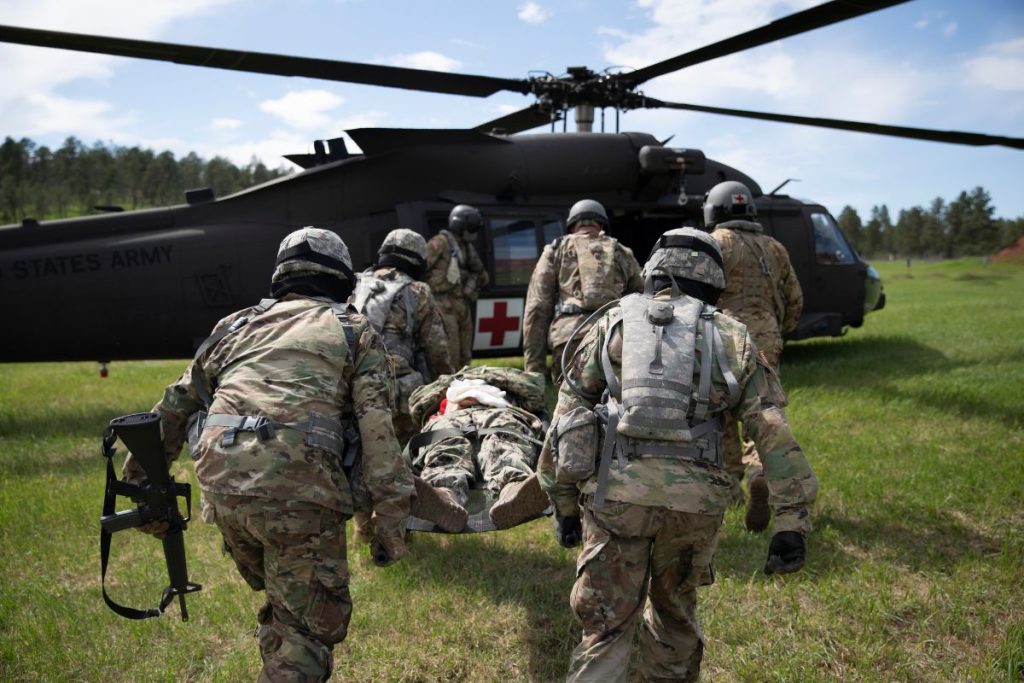
U.S. Army Reserve photo by Sgt. Gary Silverman