
Milestone follows a multiyear ROA campaign to secure a follow-on mission for the 442nd Fighter Wing
ROA today applauded the Department of the Air Force’s approval of the enterprise definition, site survey criteria and candidate location for the Air Force Reserve Command F-15E Strike Eagle basing action, which names Whiteman Air Force Base, Missouri, the sole candidate location for the mission.
Under the current plan, 24 F-15E Strike Eagles would replace the 442nd Fighter Wing’s A-10 Thunderbolts, with aircraft arrival anticipated in FY 2031. It is the most significant step yet toward a formally assigned follow-on mission for the Wing, the objective ROA has pressed since its Executive Committee adopted a time-sensitive resolution calling for the 442nd’s preservation in April 2025.
“On behalf of ROA, I thank the Department of the Air Force for its serious consideration of Whiteman Air Force Base and for approving this basing action,” said ROA CEO Maj. Gen. John B. Hashem, U.S. Army (Ret.). “This decision protects more than an airframe. It is the aircrew and maintainers who have sustained the missions at Whiteman for decades, and the combat capability the Reserve holds because of them. That proficiency takes a generation to build and can be gone within months of a unit losing its mission. Those Airmen now have a reason to stay in uniform, and the Total Force retains readiness it could not have rebuilt organically.”
A campaign built over more than a year
ROA was at the tip of the spear. In June 2025, Col. Don Brown, U.S. Air Force Reserve (Ret.), then ROA’s acting chief executive and now the Association’s Air Force Service Section Vice President, wrote on ROA’s behalf to the President, the Secretary of Defense and Congress, urging support for the 442nd and other Reserve Component units losing the A-10 without a follow-on mission. ROA pointed to the precedent at Selfridge Air National Guard Base, where the 127th Wing received F-15EX aircraft to replace its retiring A-10s, and urged leaders to act with the same urgency at Whiteman.
On Capitol Hill, Chief of Air Force Reserve Lt. Gen. John Healy endorsed a follow-on fighter mission for the 442nd in May 2025 testimony before the Senate Appropriations Committee.
In collaboration with ROA national, ROA’s Air Force Service Section, then led by Lt. Col. Susan E. Lukas, U.S. Air Force (Ret.), pressed companion priorities including modern aircraft for Reserve units losing legacy platforms, aviation incentive pay parity and full funding of the National Guard and Reserve Equipment Account. Reserve fighter capacity is projected to fall 48 percent by FY 2030.
ROA’s Department of Missouri, Air Force Service Section and national staff engaged the White House, the Pentagon, Air Force Reserve Command and Congress.
Don Stockton, U.S. Air Force (Ret.), of the Department of Missouri, Matthew Schwartzman, ROA’s Director of Legislation and Military Policy, and Lukas worked closely with the offices of Sen. Eric Schmitt and Rep. Mark Alford, who carried the fight alongside ROA throughout, to shape the A-10 language enacted in the FY 2026 National Defense Authorization Act.
That provision required the Air Force to maintain a minimum A-10 inventory, hold personnel and sustainment funding through Sept. 30, 2026, absent congressional authorization, and submit a recapitalization plan to Congress.
That language set the conditions for Secretary of the Air Force Troy E. Meink’s April 20, 2026, announcement extending the A-10 through 2030, preserving the Reserve A-10 squadron at Whiteman and the time to identify a follow-on platform.
ROA then worked four concurrent tracks: direct engagement with the White House, Pentagon and Air Force Reserve leadership, the armed services committees, and Appropriations Subcommittees on Defense. Those requests urged sustainment of the 442nd and other A-10 units without an identified follow-on, pressed for the Operations and Maintenance dollars to keep the Wing flying in the interim, and named the F-15 as a prospective and preferred follow-on platform.
Making the case for Whiteman
Asked by Armed Services Committee professional staff why Whiteman specifically warranted a follow-on mission, ROA led with the Air Force’s pilot shortage and the cost of losing experienced aircrew. Because that argument can be made for nearly any unit facing divestiture, ROA further made the case specific to the 442nd: proximity to Fort Leonard Wood, one of the Army’s primary Joint Terminal Attack Controller pipelines, sustains a joint training relationship that ends with the Wing’s flying mission; the 442nd is one of the few fully organic, self-sustaining expeditionary fighter wings in the Reserve Component, with its own operations, maintenance, mission support and medical groups; Whiteman’s existing runways, munitions storage and intelligence infrastructure can absorb a Reserve fighter mission at a fraction of the cost of new construction; and an assigned mission outlasts any bonus as a retention incentive, as the B-52 to B-1, F-4 to F-15 and F-15 to F-22 transitions demonstrate.
“Bonuses compensate Airmen for sacrifice. Missions give them a reason to stay,” Hashem said. “Our thanks go to Missouri’s congressional delegation, and to the leaders and Airmen at Whiteman who made this case impossible to ignore. ROA will stay engaged until this basing action is final and the 442nd’s Airmen have the resources to deliver airpower – anytime, anywhere.”
“This is what advocacy the ROA way looks like,” said Schwartzman. “We advocate for the Reserve Components serving today, and the 442nd is proof our work produces tangible results. Citizen-Warriors who bring us their concerns see those concerns carried to Congress, into the Pentagon and to the White House by an organization that exists to represent them and nothing else.”
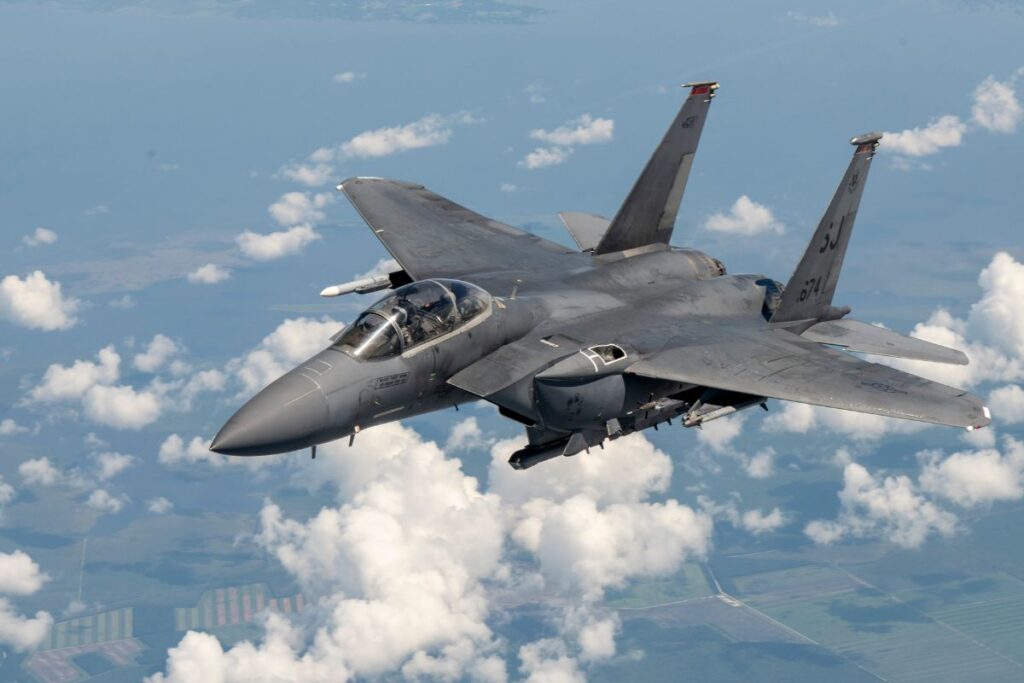
U.S. Air Force photo by Staff Sgt. Tiffany A. Emery