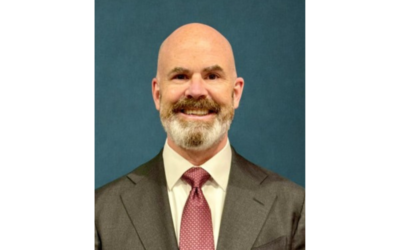
By Col. Donald C. Brown, USAF (Ret.)
I hope you have had the pleasure of being in the lobby of the Minuteman Building – the ROA headquarters in Washington, right behind the Capitol building. In the middle of the tall space, there is an awesome, large bronze statue of the classic Revolutionary-era Minuteman. Many service flags festoon the perimeter of the ceiling. The walls bear extensive names carved into the marble, all honoring those who have supported ROA over time. It is an impressive reminder of who we are and where we have come from. However, it does not forecast our future. Yet.
I’m like many of you. I served for many years both on active duty and in a reserve status. I loved the work and the people with whom I served. I am honored to be your ROA Vice President for the Air Force. During our service, we supported this country’s critical need to deter conflict by being strong. We focused on the grind of being ready to deploy when called, which was often. We all know that without the reserve component, the active defense force tempo cannot be sustained. We know our value. Or what it used to be.
Those of you currently serving may have an inkling of what the future looks like. A few weeks ago, I was invited to participate in a multi-day, full-scale war game at the Air Force’s primary war-gaming center, directed by the Doctrine Center at Air University in Maxwell AFB, AL. Our 4-star and senior commanders come here to practice. The support staff is top-tier. The attendees included senior active-duty players from combatant commands, the Air Staff, and AI leadership from across the USAF. Also, there—and this was important—were top representatives from almost all the current private software companies assisting the DOW with leading-edge AI and quantum computing expertise. It was breathtaking to see how these tools work today.
What did I learn?
Our young women and men serving today must be prepared to perform with extraordinary training and a broader imagination and vision than their predecessors. The rate of change is accelerating due to digital tools. Of course, you know this, but unless you are currently immersed in today’s warfighting world, you can’t appreciate the phenomenal speed of available computational capacity. It has changed the game for both our significant adversaries and us. More aircraft will be uncrewed. Drones will be prolific. You all have seen the change in tactics in Ukraine and, more recently, in Iran. AI accelerates our decision-making drastically. Autonomous weapons will be used to a greater extent. A main debate is the extent to which a person will be in the loop.
An aircraft maintainer will likely see aircraft systems diagnosing problems on their own, and perhaps even repairing them if digital means are sufficient. The airman could oversee this process, but the interaction will be different. There may be a pilot in the aircraft, but the role will be to coordinate mission requirements across an integrated spectrum far beyond what we retirees have experienced.
A professor who teaches AI at the Air Force Academy said this: Use caution when using AI as a shortcut/substitute for judgment, rather than as a complement that truly augments the best parts of humans/warfighters. AI is capable when the data quality is high. Those cases can be automated. Of course, a human should be left in the loop to intervene as needed. The major question is the degree to which we depend on AI when the data is less certain, and when to require a human to be in the loop. The major challenge for the Air Force is to determine the right balance between autonomy and human intervention.
Our reservists can be ready to dovetail into the active force at a time of dramatic change. I am confident that they can be prepared. ROA is needed more than ever to help today’s serving women and men stay ahead. When they join in and speak up, we are listening.